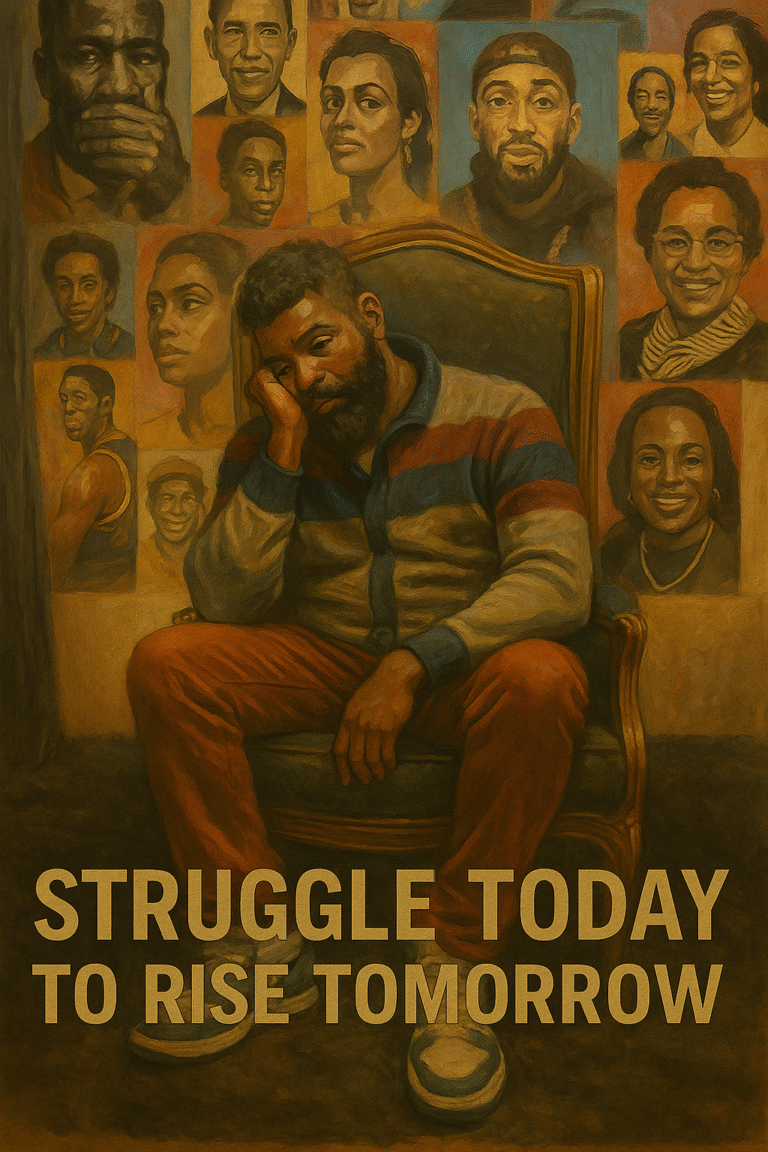
I applaud every man who answers the call to mentor — it takes heart, humility, and healing. But I grow tired of seeing the same recycled traumas repackaged as wisdom, passing broken mindsets down to the next generation. Mentorship should be about growth, not guilt. Too often, we pander with pain instead of provoking real progress. If we want to empower our youth, we must bring them truth, vision, and tools — not just survival stories.
Why Do Black Boys Have to Be Mentored by Men Who Survived Prison First?
I came across a post recently that really sat heavy with me. A woman shared online that she heard the Governor was releasing incarcerated men back into the community—not just to give them a second chance, but with the hope that they would return and serve as mentors to our youth.
Let me say this clearly:
We should absolutely support redemption and reentry.
But why is prison becoming the pipeline to mentorship in Black communities?
And why are the men who’ve avoided that path rarely seen as qualified to lead?
✊ Redemption Isn’t the Only Story That Matters
We live in a time where redemption stories are championed—and rightfully so. But I’m beginning to see a troubling pattern: it seems we celebrate the man who fell and got back up more than we support the man who’s been standing tall the whole time.
That’s not a knock on returning citizens. Many of them are doing incredible, necessary work.
But when the only men seen as “relatable” to Black boys are those who’ve done time, we start teaching a dangerous lesson:
that the only way to earn empathy or credibility is to survive the worst society has to offer.
💭 What About the Men Who’ve Been Here?
I’m a veteran.
I’ve worked in schools.
I’ve counseled, mentored, created programming, and built bridges for young men.
I’ve walked a path of discipline, reflection, and commitment. I didn’t have to be locked up to care. I didn’t need a prison sentence to become passionate about mentorship.
So where’s the space for men like me?
Why is it so hard to find funding, support, and community backing when we’ve already been doing the work?
🧠 The Issue Runs Deeper Than One Post
What that post reminded me is how comfortable this country is with symbolic gestures over structural solutions.
When we rely on formerly incarcerated men to “save” the youth, we’re not addressing the lack of investment in early intervention—or in those of us who’ve already been doing the mentoring, counseling, teaching, coaching, and leading.
And let’s be real:
This isn’t about race alone.
Plenty of Black institutions are complicit in this selective support.
Plenty of qualified, passionate Black men are getting passed over or ignored unless we fit the narrative of pain and struggle first.
💬 The Real Question: Why Are We Still Failing Black Boys?
- Why are so many mentorship programs still underfunded or volunteer-only?
- Why is support for men doing the work so slow, while performative efforts are fast-tracked?
- Why are we raising our boys in environments where the only masculine guidance they get is from men who barely made it out alive?
🛠️ What I’m Calling For
This is a call to action—not against those returning, but for those already present.
Let’s uplift a full spectrum of Black male identity.
Let’s fund prevention—not just redemption.
Let’s acknowledge the mentors who’ve stayed the course, not just the ones who found it later.
Our boys deserve more than just survival stories.
They deserve a village—filled with men who reflect all the ways you can be whole, responsible, and free.
🗣 Let’s talk. Let’s build. Let’s change the narrative.
If this speaks to you—or if you’ve felt the same frustration—I want to hear from you.
Let’s stop waiting for permission to lead. Our boys can’t afford the silence any longer.