

If you’ve found the Eisenhower Matrix helpful for prioritizing tasks, you’ll be pleased to know there are several other frameworks that can help you organize your workload and focus on what truly matters.
These tools use different lenses — from effort vs. impact to the consequences of not completing a task — but they all aim to help you make better decisions about where to spend your time.
Here are five effective alternatives to explore:
1. Action Priority Matrix
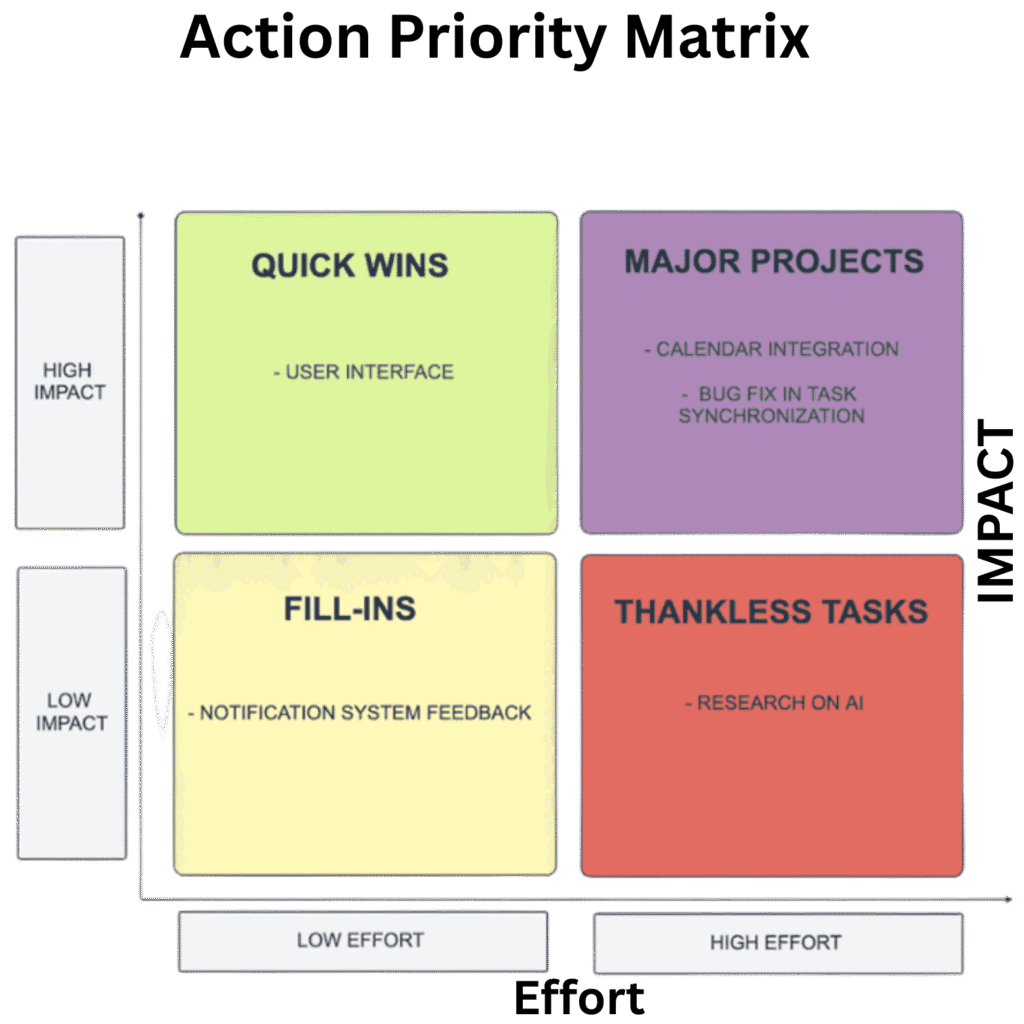
Like the Eisenhower Matrix, the Action Priority Matrix uses a four-quadrant layout, but instead of urgency and importance, it focuses on impact and effort. This makes it especially useful when you have a clear idea of potential outcomes and the work required.
The quadrants:
- Quick Wins (High Impact, Low Effort) — Top priorities that deliver maximum value with minimal effort.
- Major Projects (High Impact, High Effort) — Worthwhile, but require significant time and energy; break them into smaller steps.
- Fill-Ins (Low Impact, Low Effort) — Do these when you have extra time; not urgent.
- Thankless Tasks (Low Impact, High Effort) — Delegate or avoid; they drain time for minimal return.
2. Covey Time Management Matrix
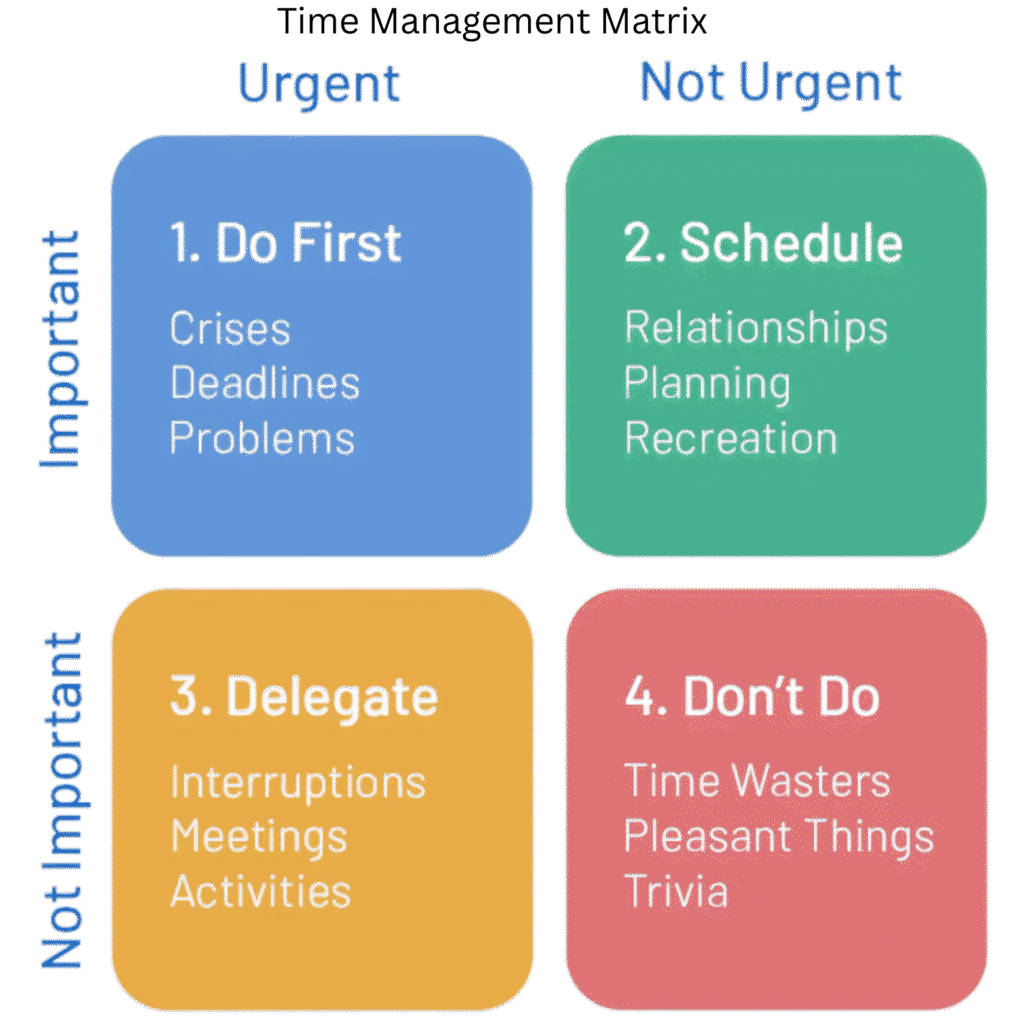
Developed by Stephen Covey in The 7 Habits of Highly Effective People, this matrix uses the same urgent vs. important axes as the Eisenhower Matrix but shifts the focus.
Covey emphasizes Quadrant 2: Important, Not Urgent — tasks like planning, relationship building, and personal development. By spending more time here, you reduce crises and keep long-term goals on track.
3. Pareto Analysis (The 80/20 Rule)
The Pareto Principle isn’t a matrix, but it’s a powerful prioritization tool. It suggests that roughly 80% of results come from 20% of efforts.
To use it:
- Identify the 20% of your tasks that produce 80% of your results.
- Focus most of your time and energy on those high-impact tasks.
- Combine this with a matrix tool to fine-tune your priorities.
4. ABCDE Method
Created by Brian Tracy, the ABCDE Method helps you prioritize by assigning each task a letter:
- A: Critical tasks with serious consequences if not done (A-1, A-2 for sub-priorities).
- B: Important tasks with minor consequences.
- C: Nice-to-do tasks with no real consequences.
- D: Delegate to someone else.
- E: Eliminate entirely.
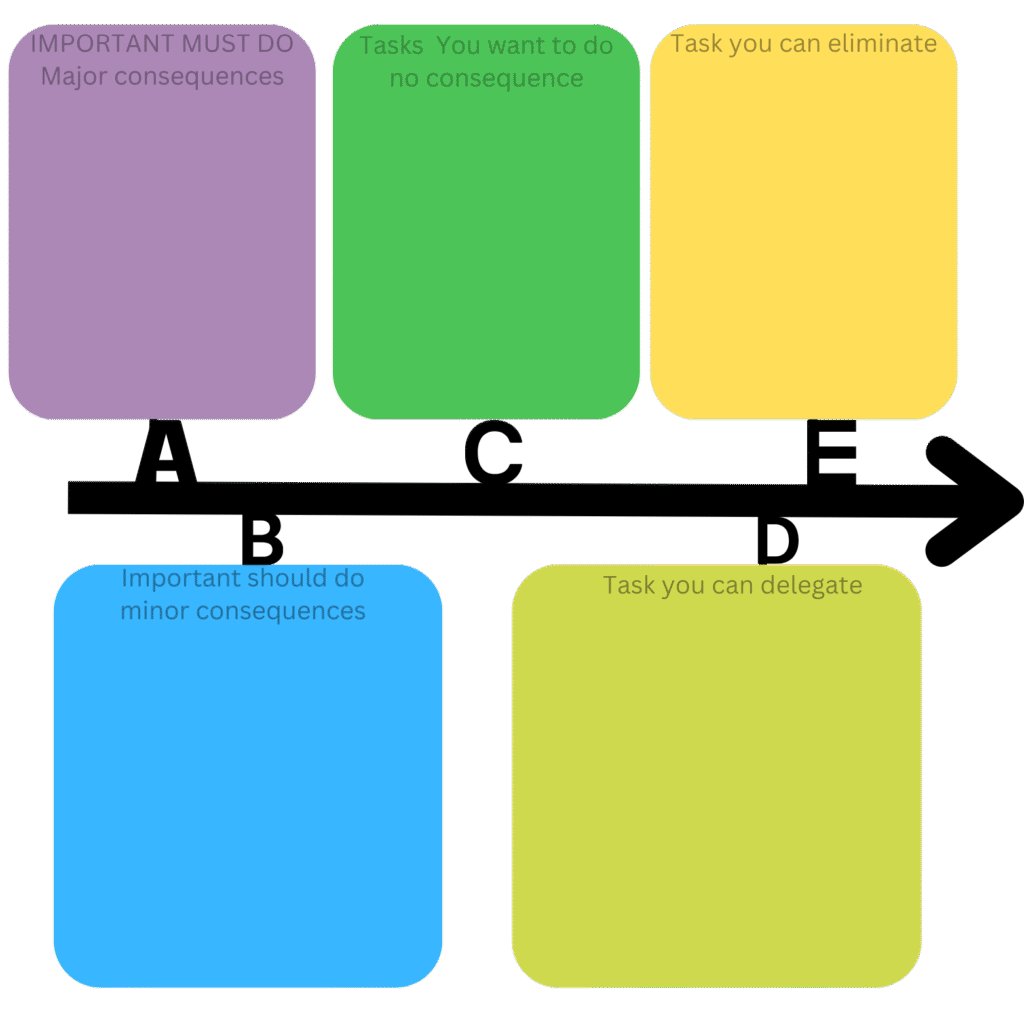
Rule: Never do a “B” before an “A,” and never do a “C” before a “B.”
5. MoSCoW Method
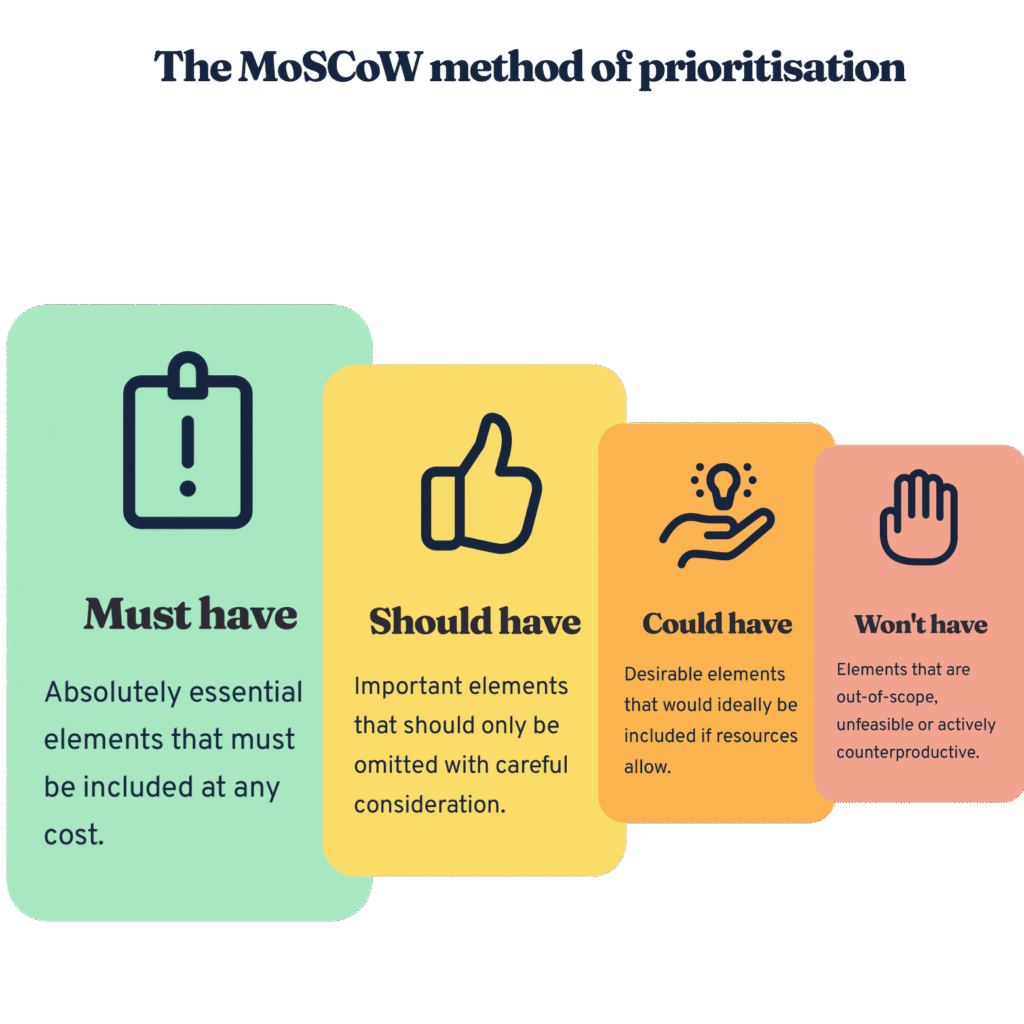
Popular in project management, especially software development, the MoSCoW Method prioritizes work into four categories:
- Must have — Non-negotiable essentials for success.
- Should have — Important, but not critical for this phase.
- Could have — Nice-to-haves if resources allow.
- Won’t have — Intentionally excluded from the current scope.
Final Takeaway
Each of these frameworks offers a slightly different way to approach your priorities. If the Eisenhower Matrix works for you, these tools can expand your options and help you choose the right approach for different situations.
The key is not just picking one method, but adapting it to your workflow — so you’re not just busy, but productive in ways that actually move you forward.
Additional Reading
If you’d like to take a deeper dive into the theory and application of prioritization frameworks, I’ve put together a detailed research paper exploring the strengths, limitations, and best-use scenarios for each tool mentioned above — and more.
📄 Read the full paper here: Research Paper on Prioritization Tools